
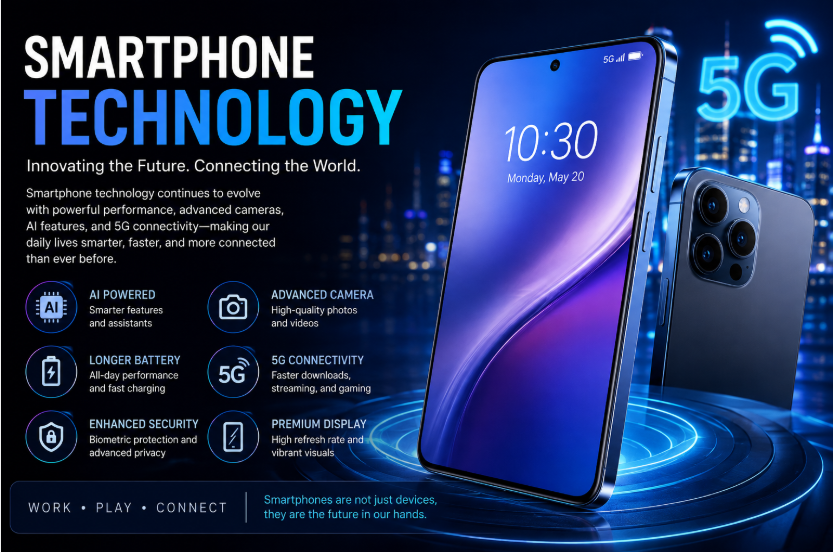
Smartphone Technology: How Modern Smartphones Are Changing Our Everyday Lives
Smartphone technology has become an essential part of modern life. From communication and entertainment to online shopping, banking, education, and business, smartphones allow people to perform countless tasks from almost anywhere. As technology continues to evolve, smartphones are becoming faster, smarter, and more powerful than ever before.
What Is Smartphone Technology?
Smartphone technology combines advanced hardware and software to create a portable device capable of performing many computer-like functions. Modern smartphones typically include powerful processors, high-resolution displays, advanced cameras, biometric security, wireless connectivity, and intelligent software.
Today’s smartphones can connect to 5G networks, Wi-Fi, Bluetooth, GPS, and other smart devices. These technologies make it easier to stay connected and access information in real time.
Latest Smartphone Technology Trends
One of the biggest trends in smartphone technology is artificial intelligence. AI-powered features can improve photography, voice assistants, translation, battery management, and personalized recommendations. Many smartphones can now automatically enhance images, recognize objects, and provide useful suggestions based on user behavior.
Camera technology is also improving rapidly. Modern smartphones feature multiple lenses, computational photography, improved night modes, optical image stabilization, and advanced video recording capabilities. These features allow users to capture professional-looking photos and videos without carrying a separate camera.
Foldable smartphones are another exciting development. Foldable displays allow manufacturers to create devices that can function as both smartphones and compact tablets. As the technology becomes more affordable and durable, foldable phones may become increasingly popular.
The Future of Smartphones
The future of smartphone technology is likely to focus on AI, faster connectivity, better battery life, improved security, and seamless integration with other smart devices. Smartphones may become even more personalized and capable of handling complex tasks with minimal user interaction.
Wearable devices, smart homes, cloud computing, and augmented reality are also expected to become more closely connected with smartphones. This could create a more integrated digital ecosystem where users can control many aspects of their daily lives from a single device.
Final Thoughts
Smartphone technology continues to transform the way we communicate, work, learn, and entertain ourselves. With advancements in artificial intelligence, cameras, displays, connectivity, and mobile computing, smartphones are becoming more than communication devices—they are powerful digital tools for everyday life.
As innovation continues, the next generation of smartphones could bring even more exciting features and change the way we interact with technology.